Showing posts with label NUCLEAR DISASTERS. Show all posts

Wednesday, March 21, 2012

India’s nuclear submarine

It may seem somewhat strange for India to lease a Russian nuclear submarine, and at a heavy cost, when an earlier similar venture didn’t turn out to be smooth and when it is itself building nuclear submarines. The 10-year lease is costing India a billion dollars. In real terms the cost will be much more. Is it India’s need? India, no doubt, gains by inducting it in its navy. But this time, it is equally, may be more, the need of the supplier. And it also meets the strategic interests of another backer.

The leased submarine, the 8,140-tonne SSN Nerpa, was commissioned in the Russian Navy in December 2000 and belongs to the Soviet-era nuclear-powered submarines of (Nato-named) Akula II Class. The Akula Class submarine was deployed for the first time in 1986 by the Soviet Navy. The project to lease two Akula-II nuclear submarines was initiated by India in 2002. The deal for the first submarine was signed in New Delhi in January 2004 and for the second in December 2007.

The Nerpa was to be delivered to India in August 2007. However, the programme was struck with several delays and at least one mishap. A fatal gas leak killing 20 crew members occurred during the submarine’s sea trials in November 2008. Transfer was then set to take place in 2009 but didn’t materialise. A fresh date in October 2010 was also not met. Read More

South Korea’s Iran

The United States is now wrestling with the nuclear fears of two of its close allies, Israel and South Korea. Israel’s alarm at the prospect of Iran acquiring a nuclear weapon is existential in nature. The same is true of South Korea, whose capital sits only 40 kilometers (25 miles) from the border with the North.

On February 29, the US and North Korea reached an agreement in which the North promised to halt its nuclear weapons development in exchange for food aid. But South Koreans know that the poverty-stricken North is highly unlikely to give up its nuclear weapons programs, no matter what it promises. Former US Defense Secretary Robert Gates’s complaint that he was “tired of buying the same horse twice” from North Korea appears to have been forgotten.

To be sure, US President Barack Obama’s administration has had some positive influence on the North, which has now agreed to a moratorium on long-range missile launches, nuclear tests, and nuclear activities at its Yongbyon facility. Moreover, the North’s hermetic communist regime will accept International Atomic Energy Agency inspectors in exchange for food aid. But such promises are usually short-lived. Read More

Japan urges N. Korea to exercise restraint from rocket launch

TOKYO (Kyodo) Japan's top government spokesman Osamu Fujimura urged North Korea on Wednesday to refrain from going ahead with its plan to launch a satellite in mid-April using a rocket, a move that has sparked international outcry.

''Together with countries concerned, it is important that we urge North Korea to exercise restraint from engaging in an action that will undermine peace and stability,'' the chief Cabinet secretary said in a news conference, referring to the launch that critics say is a disguised test of a long-range ballistic missile.

Fujimura vowed to take ''all possible measures to ensure that the people and properties (in Japan) are safe.''

North Korea announced on Friday that an ''application satellite'' will be blasted off sometime between April 12 and 16 lifted by a carrier rocket to mark the centennial of the birthday of the country's founder, the late Kim Il Sung, which falls on April 15. Despite widespread criticism, the North has said it will go ahead with the launch.

To brace for an emergency, Defense Minister Naoki Tanaka told reporters that a ''decision'' needs to be made to give an order to Self-Defense Forces to destroy North Korea's rocket.

The defense minister said during a parliament session on Monday that he is considering giving such an order if the rocket poses a danger to Japan. Read More

Osaka stirs ripples with planned anti-nuclear power pitch at KEPCO shareholders meeting

A decision by the Osaka Municipal Government, Kansai Electric Power Co.'s biggest shareholder, to suggest abolishing the company's nuclear power plants at a general shareholders meeting in June has stirred ripples.

The municipal government is expected to ask the Kobe and Kyoto municipal governments, which also hold shares in the power company, to follow suit, but individual shareholders, who account for one-third of the company's shares, could also sway the company.

Osaka Mayor Toru Hashimoto has underscored the city's right to make proposals as a shareholder from the time of the Osaka mayoral election last autumn. Kansai Electric Power Co. (KEPCO) President Makoto Yagi has sought dialogue with the city, stating, "I'd like to provide a full explanation to win understanding of our business activities." However, guidelines compiled by the Osaka Municipal Government's energy strategy council on March 18 declared "an end to all nuclear power plants as soon as possible" -- seeking complete abolition of nuclear power. At present KEPCO appears unlikely to comply with requests to eliminate nuclear power. Read More

Gillard and Abbott unite against nukes

The campaign to rid the world of nuclear weapons has inspired a rare show of bipartisan unity in federal parliament.

Prime Minister Julia Gillard on Wednesday moved a lower house motion to renew Australia's commitment to the eradication of all nuclear weapons.

The motion calls on nuclear-armed nations to cut their stockpiles and for states outside the nuclear non-proliferation treaty (NPT) to join.

It comes just days before Ms Gillard is due to join other world leaders in Seoul for the second Nuclear Security Summit, which is aimed at combating the threat of nuclear terrorism.

Ms Gillard declared nuclear weapons were a challenge all nations must address.

"We are realistic about eliminating nuclear weapons," she said. Read More

Fukushima, Europe's nuclear test

Europeans could be enhancing international security standards for nuclear power rather than opting out.

Madrid, Spain - Seen from Europe, the irrationality of the political and media discourse over nuclear energy has, if anything, increased and intensified in the year since the meltdown at Japan's Fukushima Daiichi power plant. Yet a dispassionate assessment of nuclear energy's place in the world remains as necessary as it is challenging.

Europeans should not pontificate on nuclear energy policy as if our opinion mattered worldwide, but we do. On the other hand, Europe does have a qualified responsibility in the area of security, where we still can promote an international regulatory and institutional framework that would discipline states and bring about greater transparency where global risks such as nuclear power are concerned.

Europe is equally responsible for advancing research on more secure technologies, particularly a fourth generation of nuclear reactor technology. We Europeans cannot afford the luxury of dismantling a high-value-added industrial sector in which we still have a real comparative advantage. Read More

My doomsday tab: $130K on bunkers, guns and more

NEW YORK (CNNMoney) -- The cost of preparing for doomsday isn't cheap.

First you have to stock up on the appropriate gear, ammunition, food and shelter to survive a nuclear meltdown, asteroid, earthquake, solar flare or some other catastrophe. Then there's acquiring the materials you'll need to rebuild a community after the dust settles.

The bottom line: Some self-described "preppers" are plunking down hundreds of thousands of dollars.

So far, Patrick Geryl estimates he's already spent more than $130,000 on his survival preparations.

Author of "How to Survive 2012" and eight other books about a catastrophe destined to occur this year, Geryl believes that a shift in the Earth's poles is going to result in solar flares, volcanic eruptions and earthquakes that will throw the world into a nuclear meltdown. The dreaded event will occur on December 21, when the Mayan calendar allegedly ends, he said. Read More

The Fukushima syndrome

Misconceptions surrounding the dramatic events in Japan last year call for a more informed dialogue on nuclear energy.

Birmingham, AL - The dramatic events that unfolded at Japan's Fukushima Daiichi Nuclear Power Plant after last year's tsunami are commonly referred to as "the Fukushima disaster". We need look no further than this description to begin to understand the significant misconceptions that surround nuclear energy.

It was the tsunami, caused by the largest earthquake ever to strike Japan, which killed more than 16,000 people, destroyed or damaged roughly 125,000 buildings and left the country facing what its prime minister described as its biggest crisis since World War II. Yet it is Fukushima that is habitually accorded the "disaster" label.

In fact, although what happened was shocking, the events in the hours and days after a giant wave slammed over the nuclear plant's protective seawall might be interpreted as a remarkable testament to nuclear power's sound credentials. To be sure, the environmental impact on those living close to Fukushima may take many years to remediate. But the response in many quarters - not least in Germany, Switzerland and other countries that immediately condemned and retreated from nuclear energy - once again typified an enduring lack of knowledge concerning two fundamental issues. Read More

Tuesday, March 20, 2012

Nuclear power back from the grave

A year after one of the worst industrial disasters in history - the triple reactor meltdown and spent fuel fires at the Fukushima Daiichi nuclear power plant - we still don't have a very clear idea about the full ecological, health and economic consequences facing Japan and the world.

Yet, while staggering amounts of radiation were released into the environment (the danger of new discharges lurks: even the plant director acknowledges that the reactors are "still rather fragile"), the global nuclear industry seems unfazed.

Its executives have good reasons to be cheerful, despite the gloom that had started to spread among them last year. The human lust for power - in the forms of cheap energy and nuclear weapons - is unquenchable, and seems stronger even than the fear of death and collective destruction. Meanwhile, alternative sources of such power beyond carbon fuels and nuclear energy, despite decades of efforts, are still underdeveloped. Read More

North Korea Rejects Rocket Launch Criticism as China Cautions

North Korea rejected international criticism of its planned satellite launch next month as China cautioned its ally in the first sign of tension since Kim Jong Un succeeded his father as head of the totalitarian state.

U.S., Japanese and South Korean condemnation is “a base move to deny the DPRK’s right to use space for peaceful purposes and encroach upon its sovereignty,” the official Korean Central News Agency said yesterday, referring to the country’s official name, the Democratic People’s Republic of Korea. North Korea has no intention of canceling its plans, KCNA said

Chinese Vice Foreign Minister Zhang Zhijun expressed his “worry” over the March 16 announcement to North Korean ambassador Ji Jae Ryong, the Foreign Ministry said in a statement. The U.S. said the launch, which is to mark the 100th anniversary of state founder Kim Il Sung’s birth, would negate an agreement to provide food aid in exchange for a North Korean moratorium on nuclear and missile tests. Read More

Iran will attack to defend itself: Khamenei

(Reuters) - In the face of aggression from the United States or Israel, Iran will attack to defend itself, Iran's most powerful figure, Ayatollah Ali Khamenei said on Tuesday.

"We do not have nuclear weapons and we will not build them but in the face of aggression from the enemies, whether from America or the Zionist regime, to defend ourselves we will attack on the same level as the enemies attack us," Khamenei said live on television.

"Americans are making a grave mistake if they think by making threats they will destroy the Iranian nation," he said in his annual speech to mark Nowruz, the Iranian New Year.

Israel and the United States have threatened military action against Iran unless it abandons nuclear activities which the West suspects are intended to develop nuclear weapons.

Further talks between Iran and the P5+1 group of countries are expected to take place next month in an attempt to reach a compromise deal. Read More

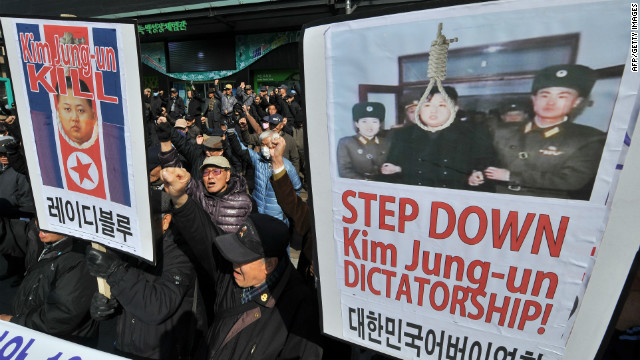
South Korean protesters rally against the North

March 20 - South Korean protesters set off fireworks during a rally against the North's plan to launch a satellite in April. Sophia Soo reports.

Momentum stalls on Obama's nuclear agenda

(Reuters) - Shortly after taking office, U.S. President Barack Obama set the goal of eventually ridding the world of nuclear weapons as a central theme of his presidency and pledged dramatic steps to lead the way.

But after lofty rhetoric and a few steps forward, Obama is facing fresh doubts about whether he is willing to take the political, diplomatic and budgetary risks that may be needed to bring his vision closer to reality.

At home, arms-control advocates who once extolled his ambitious plans are complaining about funding cuts for several key nuclear security programs, while critics on the right are leveling election-year accusations that his policies weaken America's strategic deterrence.

At the same time, Obama's efforts to spur global cooperation to prevent nuclear terrorism, which he once called the "single biggest threat" to U.S. security, have been overshadowed by the more urgent challenges of thwarting Iran's and North Korea's nuclear development.

All of this is weighing on Obama's broader nuclear agenda as he heads to Seoul next weekend for the second Nuclear Security Summit. He inaugurated the event earlier in his tenure. Read More

China holds 'frank' talks with North Korea after satellite announcement

Image: South Koreans shout during a rally denouncing the North's announcement of a planned satellite launch, in Seoul on March 20.

Beijing (CNN) -- China says it has had "a frank, in-depth talk" with North Korea about the situation on the Korean Peninsula after Pyongyang's announcement of a planned satellite launch provoked an international outcry.

Wu Dawei, China's special representative for the Korean Peninsula, met with Ri Yong Ho, a senior North Korean nuclear negotiator, in Beijing on Monday.

Wu told the Chinese broadcaster CCTV that he and Ri had exchanged "opinions on the topic of preserving the peace and stability of the Korean Peninsula," as well as on Pyongyang's planned satellite launch.

China appears to be putting pressure on North Korea over the plan to fire off a long-range rocket that the North says will carry the satellite into orbit.

South Korea has called the announcement a "grave provocation" that contravenes U.N. Security Council resolutions. Read More

North Korea invites UN nuke monitors to return

VIENNA (AP) -- North Korea has invited the International Atomic Energy Agency to return, three years after expelling its nuclear monitors, the agency said Monday. The U.S. said such a move would be welcome but remained critical of the North's rocket launch plans.

Without disclosing the North's terms, IAEA spokeswoman Gill Tudor said it received the invitation on Friday. That was the same day that Pyongyang announced it plans to launch a satellite on a rocket, a move that Washington has suggested could jeopardize a nuclear moratorium deal reached with the United States last month.

IAEA's announcement of the overture from the North came just hours after Ri Yong Ho, a senior North Korean nuclear negotiator, said Pyongyang was sending invitations to agency inspectors as part of implementing the moratorium agreement.

U.S. State Department spokeswoman Victoria Nuland said Washington had not been told of a formal invitation to the IAEA from the North -- but said such a move would be positive, while repeating America's reservations about the planned satellite launch.

"Obviously there's benefit for any access that the IAEA can get," Nuland told reporters. "But it doesn't change the fact that we would consider a satellite launch a violation not only of their U.N. obligations but of the commitments they made to us." Read More

Low-level radioactive water leaks at Tokai nuclear plant in Japan

TOKYO (Kyodo) -- Some 1.5 tons of low-level radioactive water leaked from a storage tank of a nuclear reactor in the process of decommissioning at Japan Atomic Power Co.'s plant in the village of Tokai, Ibaraki Prefecture, the Nuclear and Industrial Safety Agency said Monday.

Investigations are under way to check if the water has flowed to the sea, the agency said.

According to the announcement, the water was used to decontaminate radiation protection suits and other items and was contaminated to an extent of 33 becquerels per gram.

The leakage occurred when water was transferred from a storage tank to another tank Wednesday. It was found Monday in a building connected to the second tank via pipe. Source

High-level Radioactive cesium logged in soil near Fukushima power plant: gov't survey - Japan

TOKYO (Kyodo) -- A recent government survey showed a reading of 154,000 becquerels of radioactive cesium per kilogram in soil in the village of Iitate near the crippled Fukushima Daiichi nuclear power plant, the highest level yet recorded, the Environment Ministry said Monday.

The high-level cesium was logged in soil on the bank of the Niida River in Iitate in evacuation zones around the power plant which was crippled by earthquake and tsunami last March, the ministry said.

The figure topped the level that requires ash from incinerated debris showing more than 100,000 becquerels of cesium to be buried at disposal sites with ferroconcrete partitions. Read More

Nuclear agency to approve Ikata reactor's initial stress test soon, Japan

TOKYO (Kyodo) -- Japan's Nuclear and Industrial Safety Agency decided Monday to sign off on the results of an initial stress test on an idled nuclear reactor at the Ikata power plant in the near future, a move that would make it the third reactor to have cleared a key step for resuming operation.

The agency said in a revised draft report that it has confirmed through the test that the plant operator Shikoku Electric Power Co. has taken sufficient measures to prevent the reactor from getting into a situation similar to the accident at the Fukushima Daiichi power plant, even if it is hit by an earthquake and tsunami like the one that occurred in Japan's northeast a year ago.

Once the agency finalizes the report, the Nuclear Safety Commission, the five-member state body tasked with supervising the government's nuclear safety regulations, will check the adequacy of the agency's evaluation on the stress test on the No. 3 unit of the Ikata reactor in Ehime Prefecture, western Japan.

Prime Minister Yoshihiko Noda and three ministers concerned are then to judge whether to authorize the restart of the reactor. Read More

'Made in Japan' stamp to disappear as tsunami sees industry move out

'Made by Japan' will increasingly replace the 'Made in Japan' stamp on the goods the world buys, as the prolonged impact of the country's devastating tsunami pushes manufacturing overseas, according to economists.

On Sunday, Japan marked the first anniversary of the disaster that decimated Japan's northeast coast, left more than 19,000 dead or missing, and sparked the worst nuclear disaster since Chernobyl.

The disruption wreaked on global supply chains by Japanese factory shutdowns in the wake of the crisis has made businesses wary of the concentration of production in the country, Capital Economics has warned.

These concerns are accelerating the "hollowing out" of Japanese industry, with companies trying to reduce risk by sourcing from Japan's competitors. Japanese manufacturers are meanwhile pushing production abroad and establishing back-up sites. Read More

Monday, March 19, 2012

Radioactive water leaks at Japan nuclear plant

TOKYO: Japan's nuclear safety watchdog Monday said a leakage of about 1.5 tonnes of low-level radioactive water occurred at a plant of Japan Atomic Power Co. in the village of Tokai in Ibaraki Prefecture.

The Nuclear and Industrial Safety Agency launched an investigation to check whether the water had leaked into the sea, reported Xinhua.

The water was used to decontaminate radiation protection suits and other items and was contaminated to an extent of 33 becquerels per gram, Kyodo News said, adding that the leakage occurred when water was transferred from a storage tank to another tank of a nuclear reactor during decommissioning Wednesday. Source